
The autumn garden tidy-up: how to get through it without wrecking your back
Late September is when the garden stops being a pleasure and turns into a job. The borders have gone over, the leaves have started, and the next few weekends will go on cutting back, raking, hauling compost and getting bulbs in before the ground goes cold and claggy.
Then, some time in the first half of October, my phone goes. A back that locked up on the Sunday evening. A knee that hasn't forgiven two days of kneeling. A shoulder from a whole afternoon of raking with the same hand. It happens every year in Harrogate, and it's almost always the same story: six quiet weeks, then six hours in one go.
Here's what I'd say before you start on it, whether or not you ever come to the studio.
It isn't the weight. It's the position, and the fact it's all at once
Gardening rarely hurts people because something was too heavy. It's hundreds of small awkward things instead: forty minutes bent at the waist over a border, kneeling and twisting to get to the back of a bed, reaching above your head to prune, then lifting a wet bag of compost off the ground with straight legs and a rounded back. Our soil round here doesn't help — a full bag of anything that's been stood out in the rain is a good deal heavier than it looks.
Your body copes with a lot. What it objects to is a lot, all at once, in a position it hasn't been in since the spring.
Five things that help more than they sound like they will
- Break the day into forty-minute jobs and change position between them. Prune, then rake, then plant, rather than three straight hours of pruning. Your back can do all of it — just not all in the same shape.
- Get down to the work instead of bending to it. A kneeler or a pair of knee pads is worth more than any stretch I could give you. Half-kneel if you can: one knee down, one foot flat.
- Turn your feet, not your spine. The classic is reaching sideways for something with weight in your hands and twisting to get it. Move your feet round and face the job.
- Split the heavy bags. Two trips with a bucket beats one heroic lift. When you do lift, keep it against you, hinge from the hips and let your knees bend.
- Swap sides. Rake and dig the other way round for ten minutes, even though it feels clumsy. Everybody has a favourite side and it's the favourite one that complains on Monday.
The day after: what's ordinary and what isn't
A broad, dull tiredness through your legs, back and shoulders that's worse on the second morning than the first, eases once you get moving, and fades over a couple of days — that's ordinary. You should feel like you worked. You shouldn't feel like you hurt yourself.
What isn't ordinary: pain that's sharp rather than dull, pain in a joint rather than a muscle, anything travelling down a leg, pins and needles, anything that wakes you in the night, or anything that's worse on day four than it was on day two. None of that is something to be brave about, and none of it is mine to sort out. I teach Pilates. I'm not a physiotherapist, and a session with me is not treatment or a diagnosis — if that list sounds like you, get it looked at by somebody qualified to assess it.
If you're already seeing a physio or an osteopath, tell me what they've said and I'll work inside it, and keep up the exercises they've given you rather than swapping them for my own.
What we'd actually work on
If you come to me because the garden finds you out every autumn, the hour doesn't go on stretching your sore back. It goes on the reasons it got sore.
Hips and hamstrings, so you can hinge forward from the right place and your lower back isn't doing all the folding. Mid-back rotation, so when you turn you turn from there. Kneeling and single-leg control, because getting down to the ground and back up again is the movement the whole day is built on. And enough strength through the middle to hold a good position while your arms are busy doing something else.
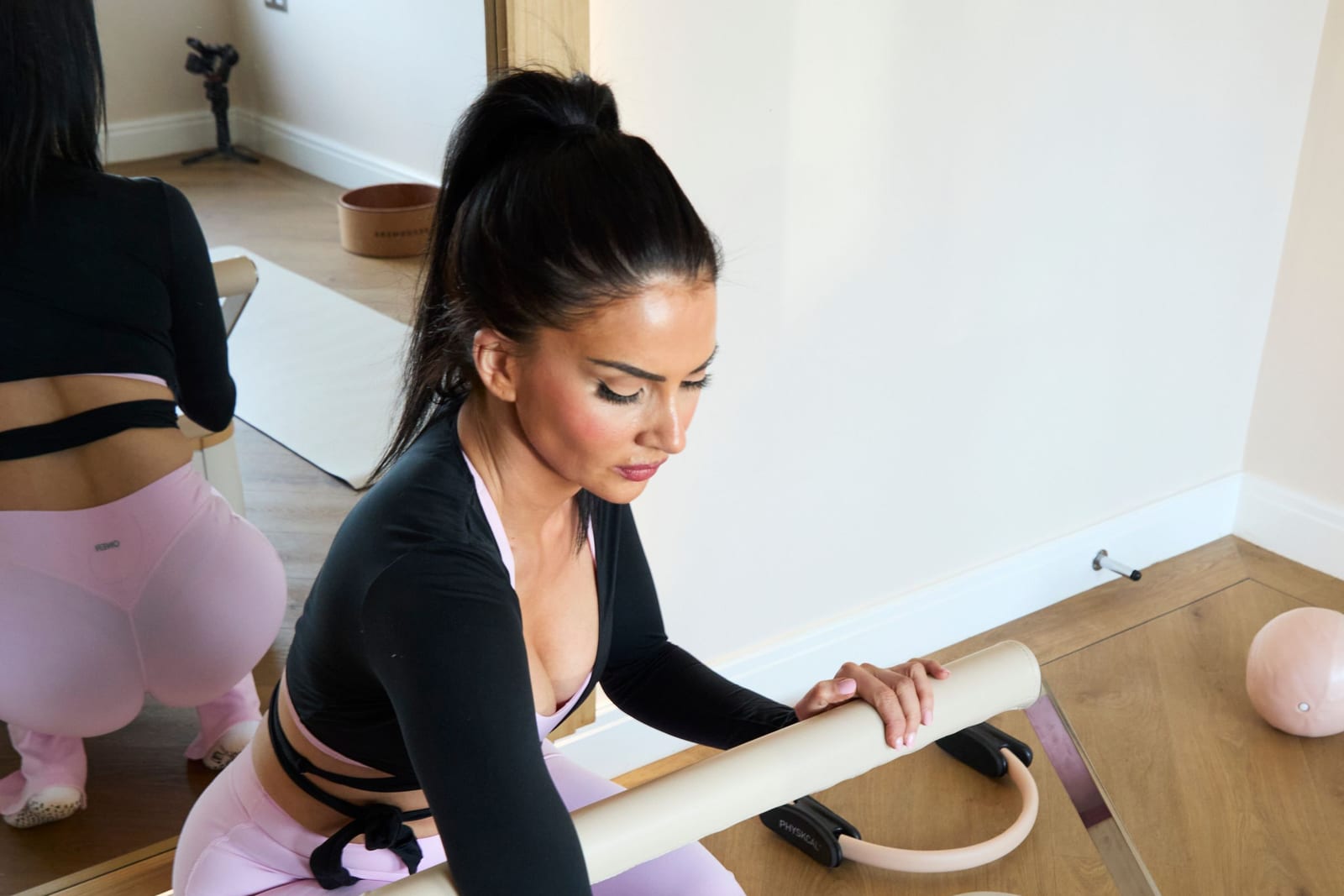
That's where the reformer earns its place. The springs can take some of your weight while you work, so we can load a muscle properly without asking a cross back to hold you up while we do it — and I can change a spring in about five seconds, so the same movement gets harder as you get stronger. It's all one to one, so I watch every repetition and correct as we go, which is where most of the progress comes from.
You'd leave with one thing to take away. For gardeners it's usually how to get down to the floor and back up without using your back as a hinge.
Where to start
Most people begin with the introductory session at £45. It isn't a taster or a chat — it's a full 55 minutes, with time at the beginning to talk properly. After that a single session is £55, or a block of five is £220, which works out at £44 each. Mat sessions are priced separately and I'm still settling that figure, so ask me rather than assume. The rest is on the prices page.
Sessions are by appointment, 9am to 3pm, from the studio at my home in Harrogate, and clients travel in from Knaresborough, Pannal, Killinghall, Spofforth, Wetherby and Ripon.
Call or text me on 07960 746480, or send me a message, and tell me what the garden does to you and where it does it. I'll tell you honestly whether I can help.